Winter has a way of seeming to oversimplify things. Summer’s confusion of greens and roofs and earths is reduced to a few obvious ciphers – white and blue crisply dividing on sunny days, melting together into gray when the light retreats, leaving black trees to point their stark, accusing fingers heaven ward, waiting for an answer that will surely come. But things are not so simple, and not merely because there is life under the surface, burgeoning even as it seems to sleep. Undisguised by the distractions of leaves or the humming heat, sunlight makes the library’s awning glow like heaven, transmutes the red barked shrubs in the median into a ruby tangle which begs you to get out of the car and reach forward towards its center. You know there is nothing here to be grasped or even remembered, yet something, something is revealing itself in the eloquence of light which pours out both cold and warm.
Category Archives: milestones and conclusions
Necessary but Not Sufficient
Necessary but not sufficient. I think we all understand the condition this logic describes, especially after a dose of the existential elixir, Vino. Nonetheless, checking my premise with Wikipedia was the bloggerly thing to do, lest I splash out too far in my claims of philosophical insight. By doing so, I can now confirm I have officially reached an age when concepts which are too smart for me, make my vision swim, and send me looking for a knitting book with lots of pictures.
An elegant model to calculate how many leaves are expendable before a tree starves surely exists, yet it seems obvious that nature’s strategy is to cover that deficit and then some…each leaf is necessary, though not sufficient to ensure continued life. I think. As I have learned this year, I am just a little leaf, but I do think the tree needs me. The whispers of all the other leaves, brushing against the wind and bearing much of the storm, sheltering and protecting me, have reassured me again and again that together, we are sufficient and each of us necessary to the other. Amidst kindnesses too many to number, shared so generously by all my family and friends, I join my own modest whisper to yours, and send it out into the mystery…”Thank You.”
The Hungry, Hungry Knitapillar
My appetite for knitting is currently ravenous. You can have the Ben & Jerry’s, but I swear I will bite your finger off if you try to take away the seemingly infinite $1 cone of yarn I found at St Vinnie’s a few years ago. Good yarn is expensive, and next to my jar of instant coffee from Trader Joe’s, the several thousand yards on this cone are the biggest bargain in my house. You don’t want this yarn anyway, believe me. It is skinny, skinny yarn, that takes forever to knit up. But when you need to knit a lot, on a budget, there is nothing wrong with yarn that takes a long time to go anywhere.
Recently someone sympathetically suggested that, given the year I have had, research proving knitting and meditation use the same parts of the brain, could explain my need – and it is a need – to knit an hour or more every day. Google reveals lots of variations on this possibility in popular media. Surrounded daily by a boisterous and irreverent cast of knitting characters in the building where I live, I have an alternate theory.
The real volume knitters I know talk while they knit, an activity usually considered incompatible with meditation practice, even Tantric (oh, baby, say my name, say my name). Granted, even for experts, talking and knitting don’t mix when counting long sequences that change unpredictably; but this is virtuoso stuff. The history of knitting includes more socializing and multi-tasking than contemplation and solitude. The more you knit, the less you need to attend to what your hands are doing. Illuminating manuscripts, it ain’t.
For my money, knitting is less like focusing on the breath, and more like chewing gum – basically unproductive, but it feels good. Knitting takes fidgeting and transmutes it into a scarf, the way a hamster wheel could make enough electricity to charge your cell phone if only we had the technology. I knit to knit, and the fact that the needles spit out something I can wear or give away is nearly coincidental. Plenty of knitters might argue, but how else do you explain knitting and re-knitting the same project to correct a mistake only you know is there, when you could just as easily be, you know, napping?
The possibility that knitting is good for people with ADD or even ADHD does ring true to me. Although learning to knit is tedious, once it clicks, you can literally knit forever without frustrating yourself (unless you choose to), or paying much attention. Knitting and talking also provide a rare instance where it is both acceptable and possible to simultaneously ignore and pay attention to the people you are with. This combination of parallel activities is like heaven for the easily distracted – a blissful union where everything can happen all at once, and no one will yell at me.
So, if you want to make me really, really happy for Christmas, you can give me a reason to knit you something and the budget for doing it. But I get to pick the yarn. And the project. Fine. I’ll just stick with my bottomless cone. I hope you like aqua.
Solace and Bourbon
The disinhibition of alcohol is a factor in Mad Man Don Draper’s genius, fictional though it may be. That is not to say that the cruel things it makes him do don’t far outweigh any benefit bestowed on his creative life, but booze does loosen the tongue. Don reserves his expressive gifts for those who can pay. When he staggers across the threshold of the home where people wait hopefully to receive expressions of his love, his drunken persona is terse, stern and withdrawn.
Word play was the eternal game in our home. No alcohol was required to fuel this fire – my parents’ craving for recognition supplied all the combustion necessary. Mom and Dad each had their version. My mother indulged in what I have come to call the Fantasy Business game, obsessively tweaking, out loud, names and tag lines for enterprises she hoped to start to further her creative ambitions. A walking thesaurus, my father could no more stem the urge to enjoin any given word with its synonym, than the sea could kiss the shore goodbye, adios, syonara.
Participation was mandatory. While other children were being trained to be mommies and daddies and well-adjusted capitalists, the Holy Grail in our home was never, never anything half so real or pragmatic as family or money. The quest, the mission, from which all graces flowed, was le mot juste. An unspoken belief as powerful as any religion, Marv & Barbara’s confidence that finding the right thing to say, and the right way to say it, would unleash some jackpot reward (of what, I can only guess), was touchingly innocent, and heart-breakingly misdirected.
These days, I find myself on that quest again, returning perhaps reflexively to the elusive promise of words. The stakes are deeply personal. Like a grain of sand wedged into the slippery folds of my consciousness, grief has elicited a need to describe where I am, made urgent by the fear of becoming even more lost. (Ironically, the search for what to say is as “found” as it is possible for me to feel.) The nacre of words both soothes and transcends the irritation, even as it hides the initial pain. Protective, secretive, the layers themselves are where the value lies, not the seed. The pearl reveals what has happened to the oyster, but we’ll never see that annoying pebble again.
And what’s next for the poor oyster, who dies giving up the pearl? Now there, Don Draper and I see eye to eye. Delicious with bourbon.
Help Wanted
Where ya been, Brenna? Oh, you know, in my head.
A few weeks ago I stopped posting to this blog, though I have kept writing. I felt disconnected so abruptly from my intended topic – the shadows of grief in my life since losing my parents this year – that I have hardly thought of anything but this interior schism ever since. Where once the mercy of connection between my heart and my world brought the grace of purpose to my introspection, I suddenly heard nothing inside but, “What’s for dinner?”
What happened was that I broke up with my job. Though, if I remember the break up rules correctly, when the other party doesn’t notice you are gone, calling it a break up is a technicality. Having long since understood that my main client would never heed my safe word, were I to be able to squeak it out, I made my escape passively, by not signing up for another round of “Don’t call us child, we’ll call you at 6pm Friday to tell you we don’t need you Monday, 7 out of every 8 times we have you on hold.” And no, no one else is waiting to take me to the prom.
At first, I thought the shift from the previously tuned in me to the suddenly blank me was due to euphoria, caused by hearing at my part time jobs that, you know, they liked me. I worried to think that happiness or relief could be somehow to blame for this sense of isolation. It has taken a few weeks to realize that shock, not happiness, had hip checked me off the field where, for once in my life, I felt I could contribute something from my heart to others, with no fear that my inadequacies disqualified me. I felt so sure that grief was an equal opportunity.
To have come this far in life with so little to show professionally is my failure. To have finally identified work that I loved, and want to excel at, so late in the game, and to have received such lukewarm response, so much indifference as I have, is my grief. A grief I was trying to end by separating myself from its most recent source, but like an infinite nesting doll, I have only revealed yet another infernal grin.
I think when our own survival is threatened, big G grief takes a holiday. The emotional airlocks seal up when it is our own death we contemplate, or in this case, the death of a dream deeply yearned for. Maybe I need a little memorial plaque, or divorce papers – something concrete to cry over or set on fire. But as sure as God made little green apples, friends, what I absolutely need is a Job.
Walk Softly and Go to the Right Playground
Just seeing me made her scream. Not cry. Wail. For half an hour. One third of the 90 minutes there were before, as her after school substitute, it would be my job to escort her, plus two other toddlers, to the afterschool playground. I know who of us was scared-er. She was; but not by much.
She didn’t need her teacher to tell her what was going to happen. She knew who was missing – the correct after school lady. She knew who I was – the stranger who didn’t belong. When she saw me go to the door, and heard me tell the other two kiddles to line up, the screaming began again. Cajoling was out of the question; neither of us liked this situation, and we were both stuck with it. I put on my “I mean business” voice. “You have to go to outside with me. Would it make you feel better to hold your friend’s hand?” “No!” interjected between body-racking cries.
Who knows how far it is between an open door and the hallway outside? If you have tried to move 3 toddler to whom you are a stranger, you know it is a very long way. If one of them is screaming, it is to the moon. If you don’t know that there is a front playground, and you try to take them to the playground in the back that you are familiar with, it is like time travel and not the good kind where you wind up with Eric Bana.
We had gone about 12 feet before I knelt down next to her, holding back the other toddlers, or so I hoped. She was wailing just as much, attracting attention throughout the entrance lobby. But she had stayed with us this far.
“You are doing so good!” I told her, bluntly, without any pandering. “I am so proud of you!” The screams paused for a split second. A little window opened. Before that moment, I don’t think it had occurred to either of us that you could be screaming and doing great, simultaneously. “You are doing a great job. I’m really impressed!” It was true. She was my hero.
The wailing reappeared briefly, but its spell was broken. A recognized friend appeared from the office, and together we went to the right playground, where the kids had, of course, tried to take me all along. I was too flustered to operate the childproof gate; my rescuer had to do it. Finally on the playground, she found a more familiar face, and eventually calmer, moved out on her own to push a tricycle around the concrete trail. When she was in earshot, I named it to the other teacher, letting her overhear. “(insert real name here) is really brave!” I said.
Later – half an hour later – I saw her looking at me from the safety of her tricycle. I caught her eye and waved unobtrusively. She smiled at me, and pushed on.
Morning Drive Time
Amid the hairpin turns of the last year’s emotional terrain, there have been a few constants – coffee with friends, my sister’s always gentle and dignified problem solving, and crying in my car on my way to work. In the dark pre-dawn, when the gas station and Starbucks are my breakfast and reason for living, my routine has evolved to a sacred ritual. Engulfed in the sounds of whatever the musical academics at WORT are playing, and triggered by ghostly landscapes veiled in fog or frost, I have been hurtling toward Milwaukee, crying. (You can fill in your own joke here…really, you don’t need my help.) Often, I cried on the way home as well.
In the first year of mourning, I think, alot of people cry spontaneously, over apparent nothings, but I have never been that kind of crier. If I am crying, you can be sure it is me I am feeling sorry for, not you. It was not self pity that fuelled my morning cry time, however. These tears welled up from a source I can’t name. Not sorrow, not fear, not even regret. Possibly relief, and certainly an experience of awe and finality. I looked forward to the time spent in the 190-horsepower V-6 womb with my companion of honest, undifferentiated feeling.
My lachrymose friend stood me up last week, however, and fickle as I am, I didn’t notice until Thursday that I had driven 16 hours, dry-eyed. Although some might call it progress, I can’t say I am happy to have turned this corner. I had wanted to make more of this time, hoping, I think, to redeem myself from the tangle of choices which have defined most of my adulthood. And maybe that has happened, and I just don’t know it yet. But the morning mist has yielded to bright sun, and the glare from the highway is a pain in the ass.
It Pays to Listen to Yourself Sometimes
“Those hollyhocks make me think of my grandmother, and not in a good way,” commented my friend Liz as we gawked our way through a local art gallery. Since I never expected to hear Lizzie say anything negative about her grandmother or hollyhocks, I took a closer look at the painting in front of us. I wanted to like the picture, too. Big sprays of hollyhocks, part Flemish still-life, part nineteenth century sentimentalism, composed with modern simplicity. But something was definitely wrong. After a few moments, I said, “Liz, I think its the frame.” Surrounded by antiqued black molding, this poor pictured looked more entombed than framed. These hollyhocks are dead by now, said the smooth, unadorned wood, and they deserved it. We both shuddered. A gold frame, we agreed, was the necessary antidote.
We were oggling jewelry in a different room, when Lizzie gasped, “Brenna, look at the flowers in the gold frame!” Hanging above the jewelry case, another painting by the same artist had been given the royal treatment. Swirls and ridges seemed to extend the voice of the painting outward in a final, expressive flourish. “Oh, I’m so glad,” I said with relief. “That other frame made me sad.” It surprised me to hear myself say it (and possibly surprised the gallery owner who was sitting 10 feet away), but it was true. That other frame had made me very sad, indeed.
The thought has stuck with me. Re-framing problems in our mental viewfinder is the foundation of all self-help. Grief’s inscrutable dimensions defy such cozy containment. Its scale is overwhelming: life, lived and unlived, both yours and another’s, encompassed in its entirety. Normal frames are not only inadequate, they are downright insane. No silver linings; no live and learn; no better luck next time.
As I struggle to find some equilibrium with this ravenous new, psychic entity, my regular life goes on, buffeted by pressures that I can scarcely define, let alone rehabilitate with snazzier molding; yet today this very solution demonstrated its power in unambiguous terms. Like words resonating in a dream, my mouth spelled out something my heart wanted to say but I was too dumb to hear. That frame made me sad. No kidding. It pays to listen to yourself sometimes. You might just learn something.
Birthday Presence
I wish I knew what you were grateful to your parents for, but I don’t. Here are a few of mine. Happy 86th, Dad. I love you very much. Thank you for the wonderful presence:
Standing sideways in the waves at the Fullerton Beach
Miyako Shoko Doo
Always having a pocket knife
Chauffeuring
Spaghetti sauce
Chicago
Trying to understand
The Winking Buddha
Shoe polish and shaving cream
Skipping
Kipling and Thurber
Ballet lessons
Finally saying I was an artist
Buying shirts at the Salvation Army 3 for $1
Teaching me to open the door for strangers
The twenty bucks
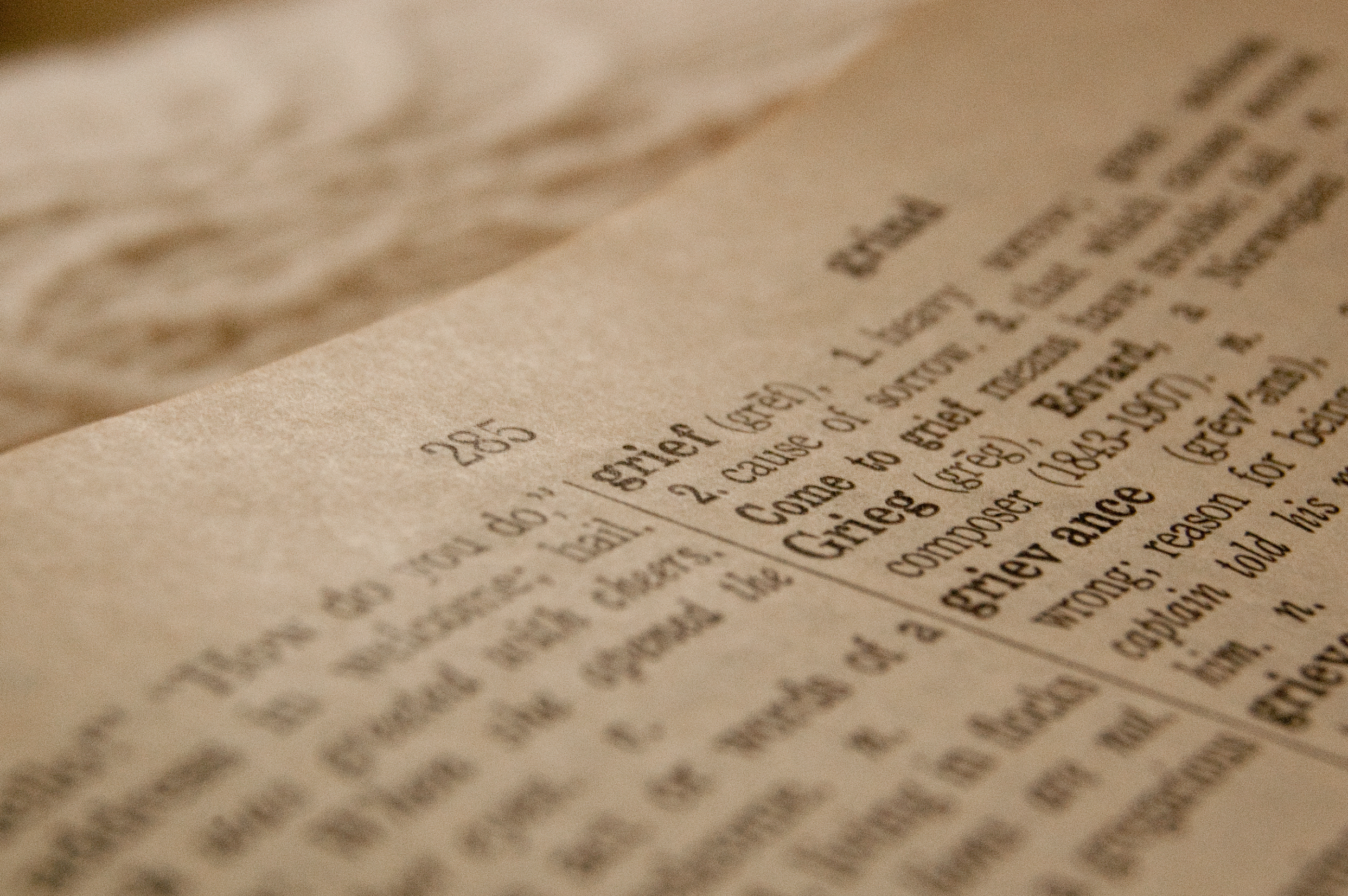
Grief is the Word
A predictable aspect of grieving my parents, which surprised me nonetheless, is the re-runs on the grief channel. By which I mean that the memory of another major parting has been rattling its chains at me like Jacob Marley’s ghost. Except, in this case, Scrooge’s theory that the apparition is just a bit of undigested beef is entirely apt.
The relief of knowing what to name the emotions which have marked my parents’ “change in life status” (how do you like them apples?) has a reassuring certainty which is, in itself, comforting. A friend who lost his dad a few weeks after Mom died asked me whether I felt the same physical pain he was having. Oh, Honey. Yes. Thus we travelled on, each along different paths perhaps, but with the same rain falling on our heads. By naming grief, I gain admission to a club which no one, not even Groucho Marx, wants to join until they can’t avoid it.
Naming and words are the white blood cells of our emotional immune system. Despite any debate over its stigmatizing effects, most people intuitively sense the powerful relief of labeling. We want to know what we are dying of. The potency of this unseen force to transform us from victim to, at a minimum, host, is compelling proof that intangibles can dominate our lives as mercilessly as any physical coercion.
It is no exaggeration to say that this word’s absence left a hole in my life as profound as the loss it might have neutralized. What about grief that goes un-named? What permits us to name some losses grief, and disqualifies others?
I lost someone. I didn’t think I would ever love anyone, and then I did, and he didn’t and that loss, in my world, was as much a death as I had ever known. But no one offered me the word “grief,” and why would they? Don’t all young people fall in love, and then bounce out of it like four year olds jumping on the mattress? Sure, they might bump their heads, but the candle is so worth the game, their enthusiasm cannot be cured.
Pressured from all sides, internal and external, to lay aside my loss and recover, my feelings emerged in actions and decisions that still make me cringe. Therapists diagnosed “low self esteem,” but believe in myself though I might, the persistence of an engulfing sadness and pain only compounded my problem with my failure to get well. Eventually, I surmised how I was supposed to act, and got a divorce from my heart. If only.
Implicit in grieving is submission. Some may erroneously set time or depth limits, but as a rule most human beings expect grief to make them feel as badly as they ever will, for longer than they really want. This capitulation to feeling, and the companionship of fellow sufferers, may be grief’s only rewards, but they are richly fecund. Exclusion from this clubhouse, for lack of the password, is true isolation.
Which has me asking, do I need more grief in my life? Do we all? Is it grief, not depression, that plagues us in heretofore unheard of numbers? Does this fearsome word, as universally understood as hunger, absorb more than its fair share of behaviors that don’t serve us, wielding the power to restoring our psychic and spiritual selves to their natural business of working to make good things happen? Because once the diagnosis of grief is on the table, there is only one more thing left to lose, and that is Time.